Photographing Ball Jointed Dolls is a unique art form. They are static, inanimate objects, yet possessing intricate joints and eerily lifelike faces. The goal of BJD photography is to inject a sense of movement, scale, and emotion into the resin. Here are five essential tips to master doll photography.
1. Master the Angles and "Eye Tracking"
Because BJDs have fixed, painted eyes (or inserted glass eyes), their gaze is directional. To make the doll look "alive," you must align your camera lens with their line of sight. Shooting slightly below the doll's eye level creates a sense of grandeur and human scale, while shooting high above them emphasizes smallness and vulnerability. Avoid direct, flat head-on shots unless you are strictly documenting a faceup.
2. Eliminate Human Scale Cues
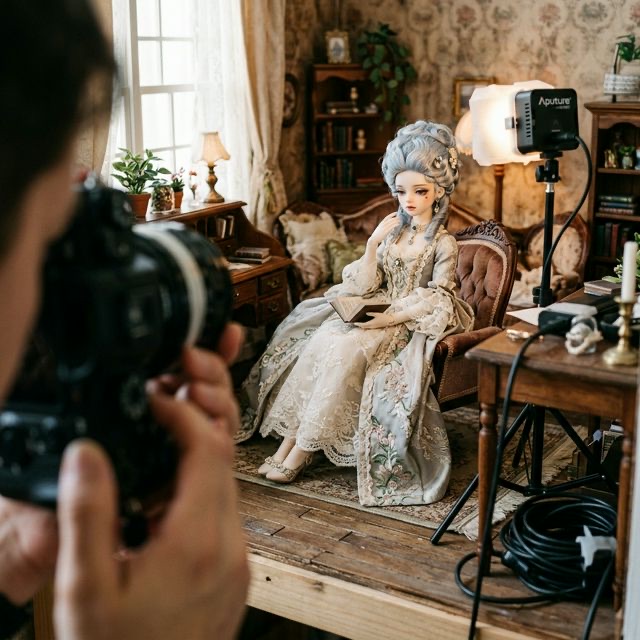
The illusion of realism is broken instantly if a giant wall outlet, oversized grass, or human furniture is visible in the background. Use "macro" techniques to blur the background (achieve a shallow depth of field/bokeh) using an aperture of f/1.8 to f/2.8. Seek out miniature environments, diorama sets, or shoot against neutral textures like bark, large leaves, or seamless backdrop paper to hide the true scale.
3. Utilize Soft, Diffused Lighting
Harsh direct light creates blown-out highlights on poly-resin and harsh, unflattering shadows under the chin and nose, highlighting the mechanical joints. Use a large softbox or, ideally, natural indirect window light. Overcast days provide the perfect "giant softbox" effect for outdoor shoots. When shooting indoors, placing a layer of white sheer fabric or tissue paper between a harsh lamp and the doll will dramatically soften the aesthetic.
4. Respect Body Mechanics and Weight Distribution
A common mistake in BJD photography is the "floppy arm" syndrome—leaving the doll's arms hanging dead at their sides while the face stares intently. For a dynamic pose, think about human body language. If a person leans against a wall, their weight shifts onto one leg (contrapposto). Adjust the doll’s ankles so the feet rest flat against the ground, slightly twist the torso, and pose the hands interactionally (e.g., lightly touching a dress fold, holding an object, or resting softly against their collarbone).
5. Composition and Negative Space
Utilize the Rule of Thirds. Do not always place the doll dead-center in the frame. Position their eyes at the upper-third intersection lines, and leave negative space in the direction the doll is looking. This creates a narrative tension, making the viewer wonder what the doll is observing just outside the frame.