The defining characteristic of a Ball Jointed Doll is its articulated internal engineering. The spherical balls intersecting the hollow resin limbs allow for a vast array of human-like posing. However, not all joints are created equal. The BJD world is split primarily between two anatomical architectures: Single-Jointed and Double-Jointed bodies.
Single-Jointed Engineering
Single-jointed bodies represent the classic, original engineering utilized heavily in the early days of modern BJDs (such as early Volks Super Dollfies).
- Structure: A single ball connects two long limbs (e.g., an upper arm and a lower forearm meet at one central elbow ball).
- Aesthetics: Because there is only one seam line, single joints offer a vastly superior, unbroken, and highly aesthetic silhouette. They look beautiful nude or in photography that exposes the arms and legs, as the mechanical interruption is minimal.
- Functionality: Poseability is highly restricted. A single-jointed elbow or knee can usually only bend to a 90-degree angle. The doll cannot touch its face, kneel tightly, or sit comfortably in complex cross-legged positions.
Double-Jointed Engineering
As the hobby evolved, collectors demanded superior poseability. The double-joint (often affectionately called the "peanut joint") was engineered to solve the 90-degree limitation.
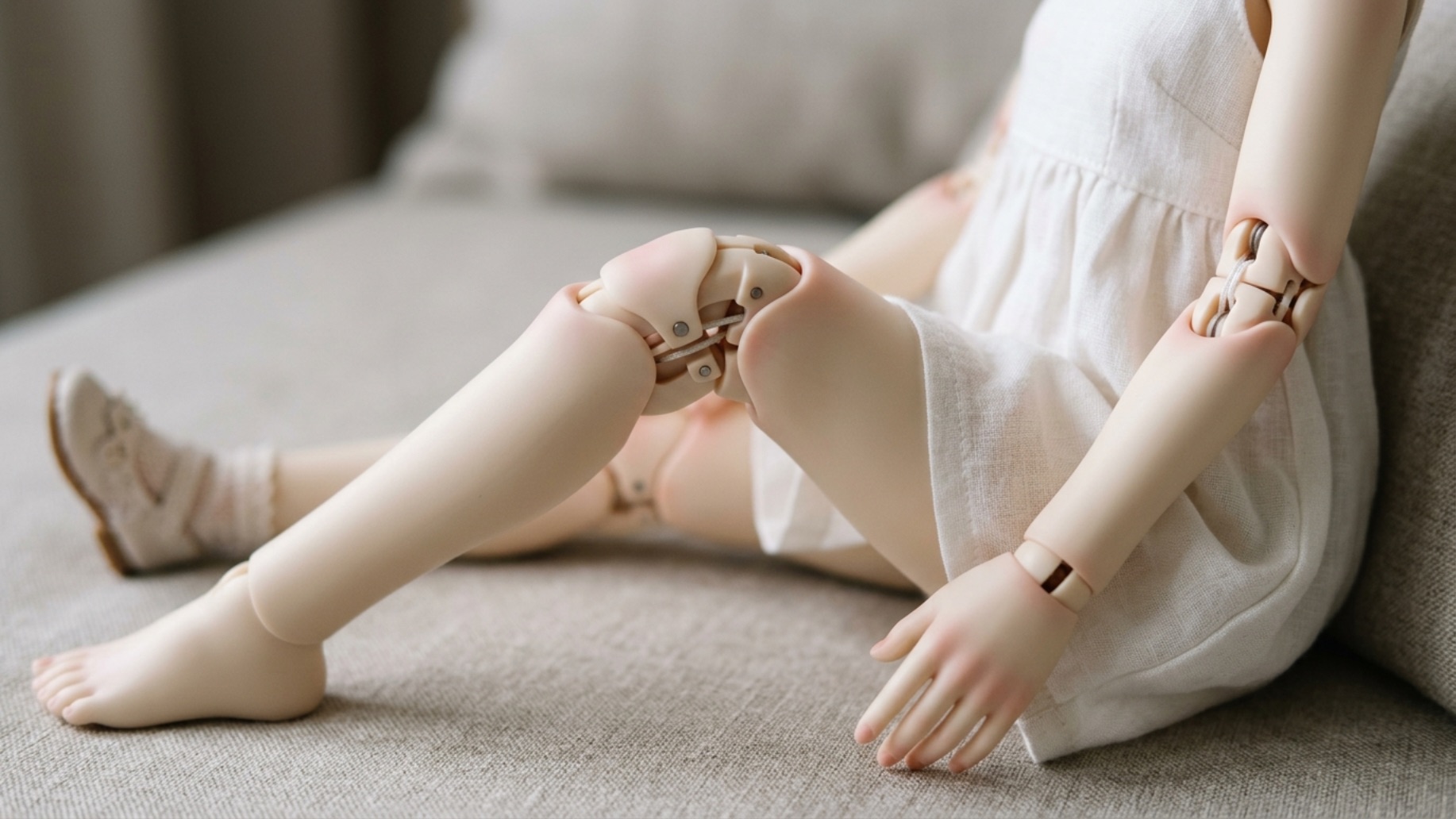
- Structure: The joint consists of an intermediary, freestanding resin piece (shaped somewhat like a peanut or a hinge) that sits completely inside the intersection of the upper and lower limbs. It contains two articulation points instead of one.
- Functionality: A double-joint allows for an incredible 180-degree bend. The doll can completely fold its arm backward to touch its own shoulder, hold its face securely, and achieve deep, tight kneeling or dynamic action poses.
- Aesthetics: The tradeoff for extreme functionality is a disruption of the anatomical silhouette. A double joint introduces two distinct mechanical seam lines near the knee or elbow, which can appear clunky, robotic, or hyper-industrial when photographed nude.
Which Should You Choose?
The choice between single and double joints depends entirely on your goals. If you are a fashion photographer focused on pristine, uninterrupted nude forms and elegant standing poses, a single-jointed body provides the sleekest canvas. If you prioritize dynamic interactivity, story-based diorama posing, and high-fashion articulation where joints are hidden beneathe detailed clothing, double-jointed engineering is absolutely mandatory.