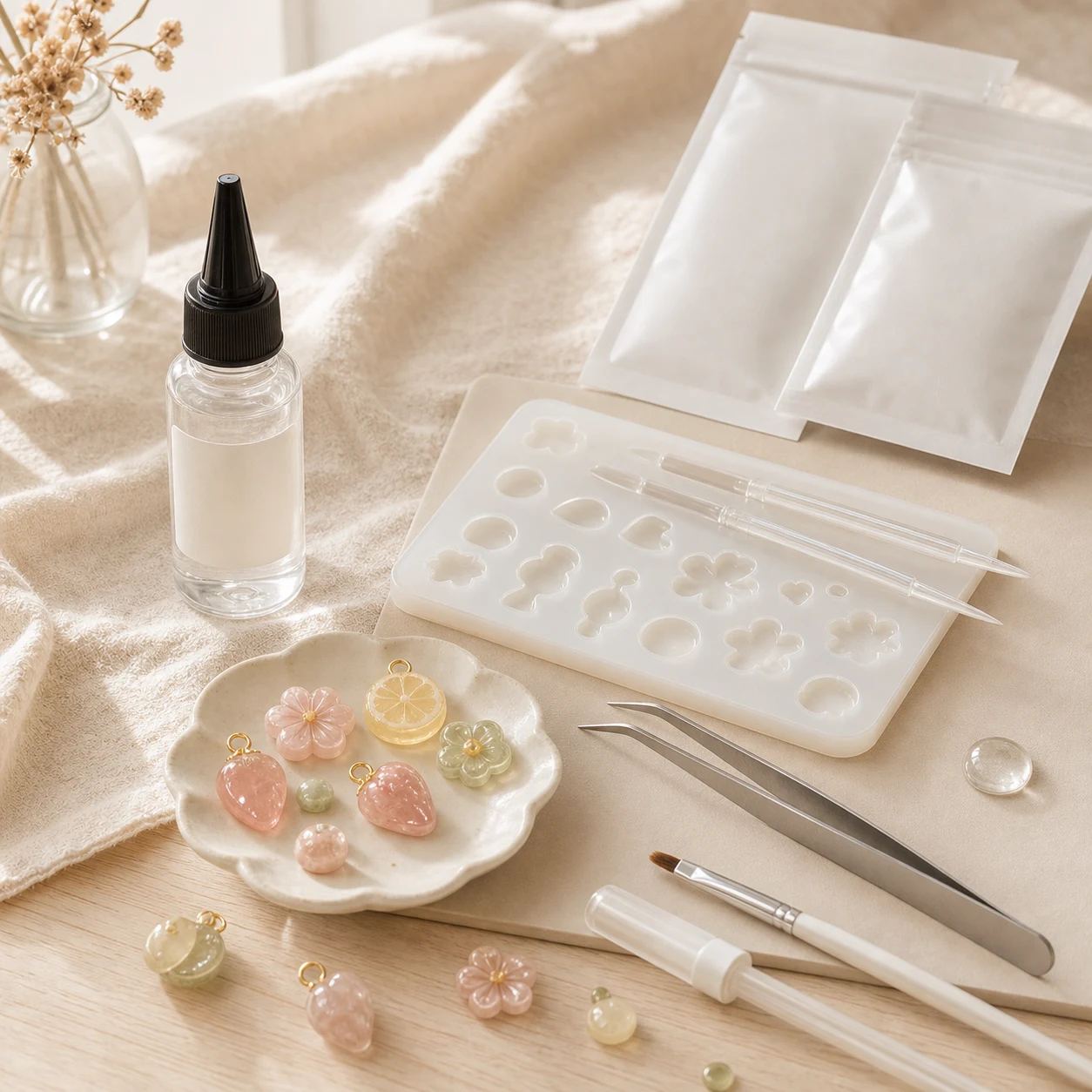
Resin clay vs polymer clay should be decided by drying method, softness, detail depth, finish, and repeatability. ResinDrip routes uncertain material substitutes to support instead of guessing.
Drying or baking is the first difference
Is resin clay air dry? Resin clay is usually chosen as an air-dry material path, while polymer clay normally needs baking. Does resin clay need baking? Do not bake an unknown clay body unless the exact product instructions say so.
Choose resin clay for soft miniature work
Air-dry resin clay is useful for miniature food, flowers, small decor, and painted details when a no-bake workflow is preferred. Test drying, shrinkage, and sealer on one sample before deciding resin clay vs air dry clay for a project.
Choose polymer clay when baking is part of the workflow
Polymer clay can hold crisp detail after baking, but it needs oven control and project-specific safety checks. UV resin for polymer clay may still be used later as a gloss finish.
Use support for substitutes
Compare resin clay vs polymer clay, air dry resin clay, and human material support before substituting a brand or classroom material.