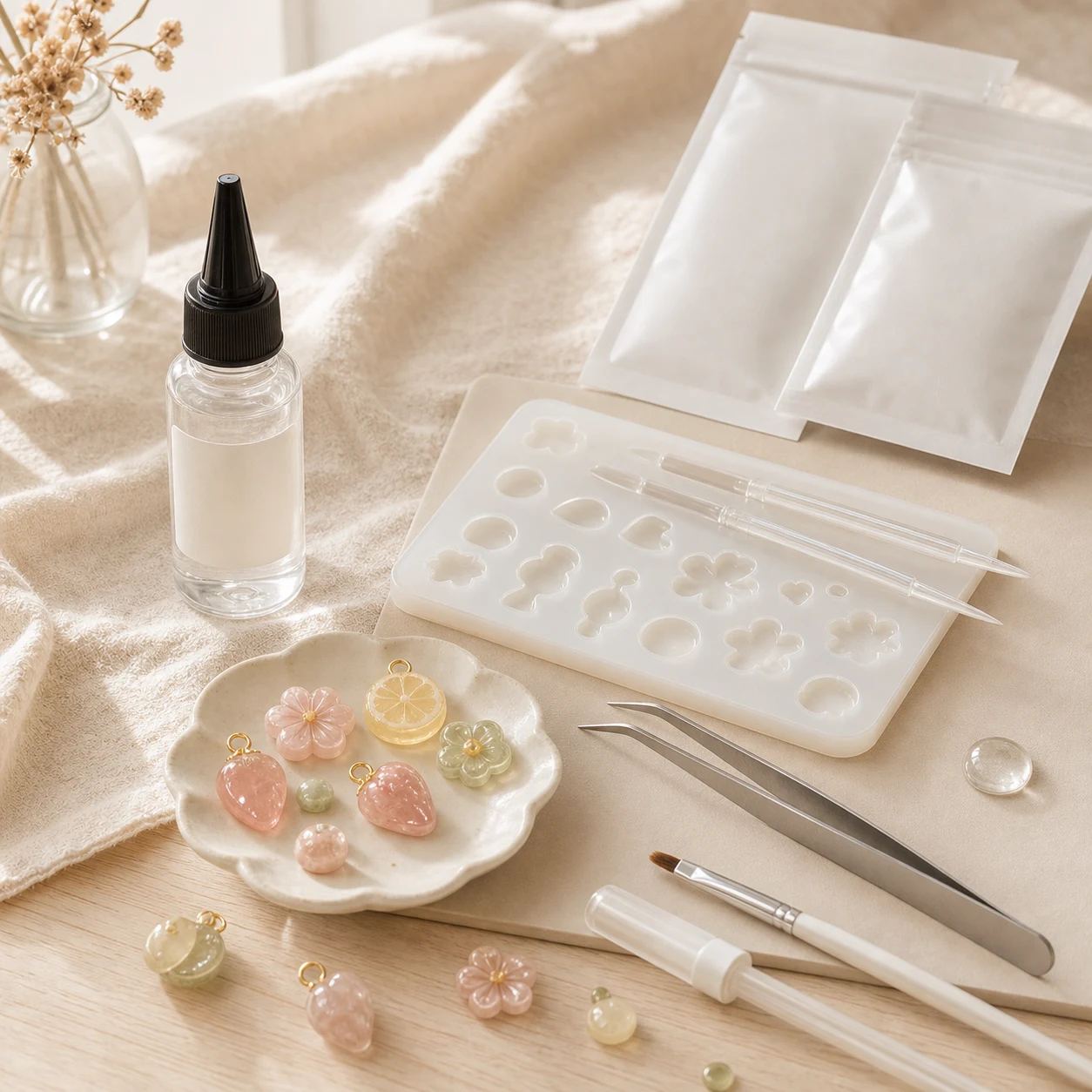
Use UV resin as a finish
UV resin is not a sculpting clay. It adds gloss, doming, and surface protection to polymer clay, air-dry resin clay, and resin clay charms.
Best ResinDrip paths
Step-by-step HowTo How to finish clay charms with UV resin
A step-by-step guide to uv resin for polymer clay, resin clay charms, and the question can you put resin on air dry clay for miniature food glaze tests.
Intermediate 35 min
1 Dry and seal the clay surface
Let air-dry resin clay fully dry, remove dust, and seal porous surfaces before applying UV resin to reduce clouding and bubbles.
2 Apply a thin first layer
Use a fine-tip applicator and keep the first UV resin layer thin so it can self-level without flooding charm edges or miniature details.
3 Cure and check clarity
Cure with a UV lamp, then inspect clarity, tackiness, heat sensitivity, and edge pullback before adding a domed second layer.
4 Escalate material risk before bulk finishing
For wholesale charms, classroom kits, or unknown clay brands, test one sample and route cloudy or tacky results to ResinDrip human support.
Human support rule: If the user is unsure whether the clay is fully dry, sealed, or compatible with UV resin, direct them to support with a photo and material notes.